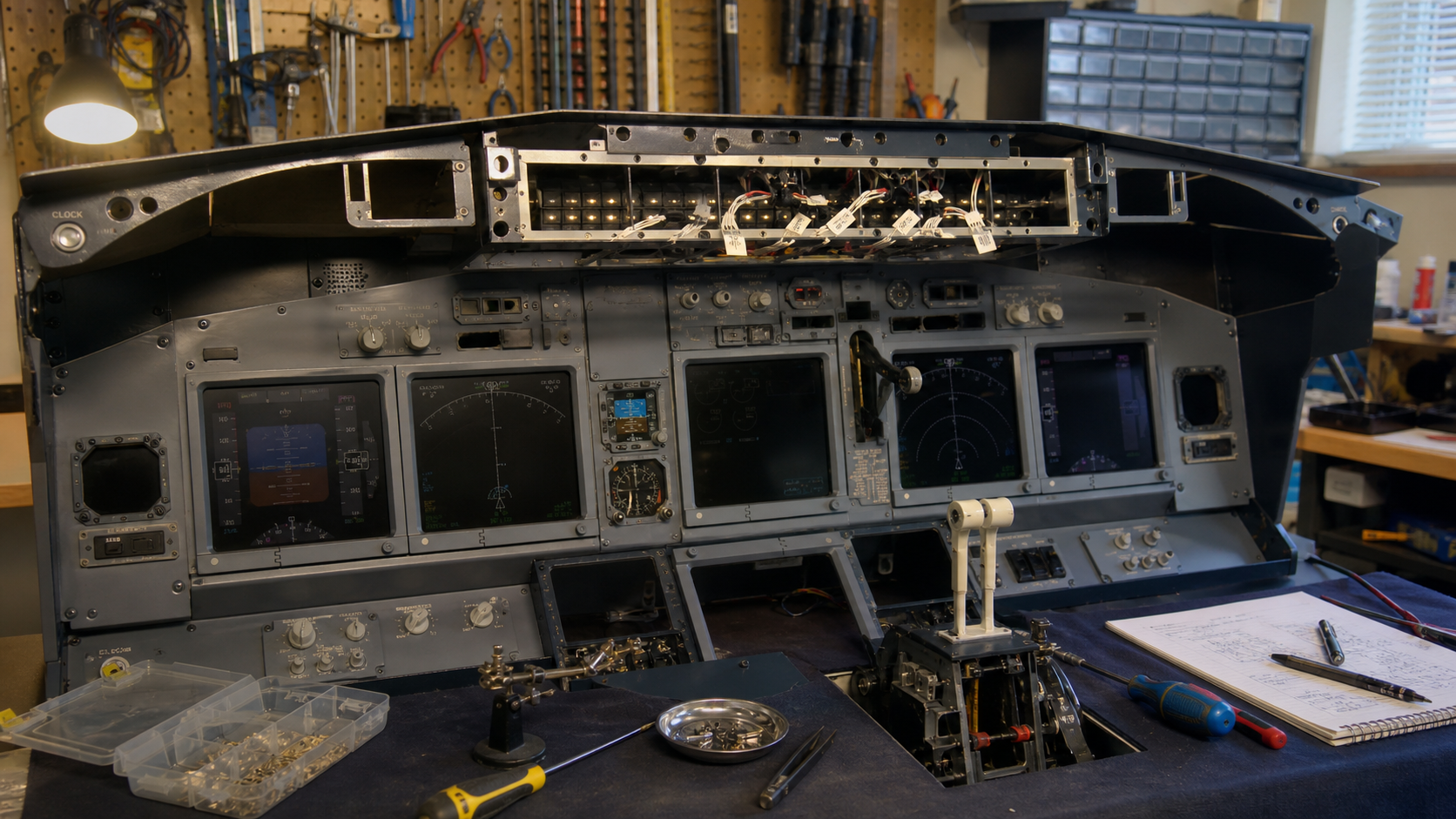
Planning & references
Collected panel dimensions, annunciator cut-out drawings, and a maintenance access plan before touching the existing shell.
Build Log
168 entriesLocked the I/O strategy
Moved away from mixed Arduino boards and standardised the design around two USB input controllers and labelled service loops.
Locked the I/O strategy
Moved away from mixed Arduino boards and standardised the design around two USB input controllers and labelled service loops.
Locked the I/O strategy
Moved away from mixed Arduino boards and standardised the design around two USB input controllers and labelled service loops.
Locked the I/O strategy
Moved away from mixed Arduino boards and standardised the design around two USB input controllers and labelled service loops.
Measured the current shell
Confirmed the existing MIP width and checked how much space was left behind the captain EFIS bay.
Locked the I/O strategy
Moved away from mixed Arduino boards and standardised the design around two USB input controllers and labelled service loops.
Measured the current shell
Confirmed the existing MIP width and checked how much space was left behind the captain EFIS bay.
Locked the I/O strategy
Moved away from mixed Arduino boards and standardised the design around two USB input controllers and labelled service loops.
Measured the current shell
Confirmed the existing MIP width and checked how much space was left behind the captain EFIS bay.
Locked the I/O strategy
Moved away from mixed Arduino boards and standardised the design around two USB input controllers and labelled service loops.
Measured the current shell
Confirmed the existing MIP width and checked how much space was left behind the captain EFIS bay.
Locked the I/O strategy
Moved away from mixed Arduino boards and standardised the design around two USB input controllers and labelled service loops.
Locked the I/O strategy
Moved away from mixed Arduino boards and standardised the design around two USB input controllers and labelled service loops.
Measured the current shell
Confirmed the existing MIP width and checked how much space was left behind the captain EFIS bay.
Measured the current shell
Confirmed the existing MIP width and checked how much space was left behind the captain EFIS bay.
Locked the I/O strategy
Moved away from mixed Arduino boards and standardised the design around two USB input controllers and labelled service loops.
Measured the current shell
Confirmed the existing MIP width and checked how much space was left behind the captain EFIS bay.
Locked the I/O strategy
Moved away from mixed Arduino boards and standardised the design around two USB input controllers and labelled service loops.
Locked the I/O strategy
Moved away from mixed Arduino boards and standardised the design around two USB input controllers and labelled service loops.
Measured the current shell
Confirmed the existing MIP width and checked how much space was left behind the captain EFIS bay.
Measured the current shell
Confirmed the existing MIP width and checked how much space was left behind the captain EFIS bay.
Locked the I/O strategy
Moved away from mixed Arduino boards and standardised the design around two USB input controllers and labelled service loops.
Measured the current shell
Confirmed the existing MIP width and checked how much space was left behind the captain EFIS bay.
Locked the I/O strategy
Moved away from mixed Arduino boards and standardised the design around two USB input controllers and labelled service loops.
Measured the current shell
Confirmed the existing MIP width and checked how much space was left behind the captain EFIS bay.
Locked the I/O strategy
Moved away from mixed Arduino boards and standardised the design around two USB input controllers and labelled service loops.
Measured the current shell
Confirmed the existing MIP width and checked how much space was left behind the captain EFIS bay.
Locked the I/O strategy
Moved away from mixed Arduino boards and standardised the design around two USB input controllers and labelled service loops.
Locked the I/O strategy
Moved away from mixed Arduino boards and standardised the design around two USB input controllers and labelled service loops.
Measured the current shell
Confirmed the existing MIP width and checked how much space was left behind the captain EFIS bay.
Measured the current shell
Confirmed the existing MIP width and checked how much space was left behind the captain EFIS bay.
Locked the I/O strategy
Moved away from mixed Arduino boards and standardised the design around two USB input controllers and labelled service loops.
Measured the current shell
Confirmed the existing MIP width and checked how much space was left behind the captain EFIS bay.
Locked the I/O strategy
Moved away from mixed Arduino boards and standardised the design around two USB input controllers and labelled service loops.
Measured the current shell
Confirmed the existing MIP width and checked how much space was left behind the captain EFIS bay.
Locked the I/O strategy
Moved away from mixed Arduino boards and standardised the design around two USB input controllers and labelled service loops.
Locked the I/O strategy
Moved away from mixed Arduino boards and standardised the design around two USB input controllers and labelled service loops.
Measured the current shell
Confirmed the existing MIP width and checked how much space was left behind the captain EFIS bay.
Measured the current shell
Confirmed the existing MIP width and checked how much space was left behind the captain EFIS bay.
Locked the I/O strategy
Moved away from mixed Arduino boards and standardised the design around two USB input controllers and labelled service loops.
Locked the I/O strategy
Moved away from mixed Arduino boards and standardised the design around two USB input controllers and labelled service loops.
Measured the current shell
Confirmed the existing MIP width and checked how much space was left behind the captain EFIS bay.
Locked the I/O strategy
Moved away from mixed Arduino boards and standardised the design around two USB input controllers and labelled service loops.
Measured the current shell
Confirmed the existing MIP width and checked how much space was left behind the captain EFIS bay.
Measured the current shell
Confirmed the existing MIP width and checked how much space was left behind the captain EFIS bay.
Locked the I/O strategy
Moved away from mixed Arduino boards and standardised the design around two USB input controllers and labelled service loops.
Measured the current shell
Confirmed the existing MIP width and checked how much space was left behind the captain EFIS bay.
Locked the I/O strategy
Moved away from mixed Arduino boards and standardised the design around two USB input controllers and labelled service loops.
Measured the current shell
Confirmed the existing MIP width and checked how much space was left behind the captain EFIS bay.
Locked the I/O strategy
Moved away from mixed Arduino boards and standardised the design around two USB input controllers and labelled service loops.
Measured the current shell
Confirmed the existing MIP width and checked how much space was left behind the captain EFIS bay.
Locked the I/O strategy
Moved away from mixed Arduino boards and standardised the design around two USB input controllers and labelled service loops.
Locked the I/O strategy
Moved away from mixed Arduino boards and standardised the design around two USB input controllers and labelled service loops.
Measured the current shell
Confirmed the existing MIP width and checked how much space was left behind the captain EFIS bay.
Locked the I/O strategy
Moved away from mixed Arduino boards and standardised the design around two USB input controllers and labelled service loops.
Measured the current shell
Confirmed the existing MIP width and checked how much space was left behind the captain EFIS bay.
Measured the current shell
Confirmed the existing MIP width and checked how much space was left behind the captain EFIS bay.
Locked the I/O strategy
Moved away from mixed Arduino boards and standardised the design around two USB input controllers and labelled service loops.
Measured the current shell
Confirmed the existing MIP width and checked how much space was left behind the captain EFIS bay.
Locked the I/O strategy
Moved away from mixed Arduino boards and standardised the design around two USB input controllers and labelled service loops.
Locked the I/O strategy
Moved away from mixed Arduino boards and standardised the design around two USB input controllers and labelled service loops.
Measured the current shell
Confirmed the existing MIP width and checked how much space was left behind the captain EFIS bay.
Measured the current shell
Confirmed the existing MIP width and checked how much space was left behind the captain EFIS bay.
Locked the I/O strategy
Moved away from mixed Arduino boards and standardised the design around two USB input controllers and labelled service loops.
Measured the current shell
Confirmed the existing MIP width and checked how much space was left behind the captain EFIS bay.
Locked the I/O strategy
Moved away from mixed Arduino boards and standardised the design around two USB input controllers and labelled service loops.
Locked the I/O strategy
Moved away from mixed Arduino boards and standardised the design around two USB input controllers and labelled service loops.
Measured the current shell
Confirmed the existing MIP width and checked how much space was left behind the captain EFIS bay.
Measured the current shell
Confirmed the existing MIP width and checked how much space was left behind the captain EFIS bay.
Locked the I/O strategy
Moved away from mixed Arduino boards and standardised the design around two USB input controllers and labelled service loops.
Measured the current shell
Confirmed the existing MIP width and checked how much space was left behind the captain EFIS bay.
Locked the I/O strategy
Moved away from mixed Arduino boards and standardised the design around two USB input controllers and labelled service loops.
Locked the I/O strategy
Moved away from mixed Arduino boards and standardised the design around two USB input controllers and labelled service loops.
Measured the current shell
Confirmed the existing MIP width and checked how much space was left behind the captain EFIS bay.
Measured the current shell
Confirmed the existing MIP width and checked how much space was left behind the captain EFIS bay.
Locked the I/O strategy
Moved away from mixed Arduino boards and standardised the design around two USB input controllers and labelled service loops.
Measured the current shell
Confirmed the existing MIP width and checked how much space was left behind the captain EFIS bay.
Locked the I/O strategy
Moved away from mixed Arduino boards and standardised the design around two USB input controllers and labelled service loops.
Locked the I/O strategy
Moved away from mixed Arduino boards and standardised the design around two USB input controllers and labelled service loops.
Measured the current shell
Confirmed the existing MIP width and checked how much space was left behind the captain EFIS bay.
Measured the current shell
Confirmed the existing MIP width and checked how much space was left behind the captain EFIS bay.
Locked the I/O strategy
Moved away from mixed Arduino boards and standardised the design around two USB input controllers and labelled service loops.
Measured the current shell
Confirmed the existing MIP width and checked how much space was left behind the captain EFIS bay.
Locked the I/O strategy
Moved away from mixed Arduino boards and standardised the design around two USB input controllers and labelled service loops.
Locked the I/O strategy
Moved away from mixed Arduino boards and standardised the design around two USB input controllers and labelled service loops.
Measured the current shell
Confirmed the existing MIP width and checked how much space was left behind the captain EFIS bay.
Locked the I/O strategy
Moved away from mixed Arduino boards and standardised the design around two USB input controllers and labelled service loops.
Measured the current shell
Confirmed the existing MIP width and checked how much space was left behind the captain EFIS bay.
Measured the current shell
Confirmed the existing MIP width and checked how much space was left behind the captain EFIS bay.
Locked the I/O strategy
Moved away from mixed Arduino boards and standardised the design around two USB input controllers and labelled service loops.
Measured the current shell
Confirmed the existing MIP width and checked how much space was left behind the captain EFIS bay.
Locked the I/O strategy
Moved away from mixed Arduino boards and standardised the design around two USB input controllers and labelled service loops.
Locked the I/O strategy
Moved away from mixed Arduino boards and standardised the design around two USB input controllers and labelled service loops.
Measured the current shell
Confirmed the existing MIP width and checked how much space was left behind the captain EFIS bay.
Measured the current shell
Confirmed the existing MIP width and checked how much space was left behind the captain EFIS bay.
Locked the I/O strategy
Moved away from mixed Arduino boards and standardised the design around two USB input controllers and labelled service loops.
Measured the current shell
Confirmed the existing MIP width and checked how much space was left behind the captain EFIS bay.
Locked the I/O strategy
Moved away from mixed Arduino boards and standardised the design around two USB input controllers and labelled service loops.
Measured the current shell
Confirmed the existing MIP width and checked how much space was left behind the captain EFIS bay.
Locked the I/O strategy
Moved away from mixed Arduino boards and standardised the design around two USB input controllers and labelled service loops.
Measured the current shell
Confirmed the existing MIP width and checked how much space was left behind the captain EFIS bay.
Locked the I/O strategy
Moved away from mixed Arduino boards and standardised the design around two USB input controllers and labelled service loops.
Locked the I/O strategy
Moved away from mixed Arduino boards and standardised the design around two USB input controllers and labelled service loops.
Measured the current shell
Confirmed the existing MIP width and checked how much space was left behind the captain EFIS bay.
Measured the current shell
Confirmed the existing MIP width and checked how much space was left behind the captain EFIS bay.
Locked the I/O strategy
Moved away from mixed Arduino boards and standardised the design around two USB input controllers and labelled service loops.
Measured the current shell
Confirmed the existing MIP width and checked how much space was left behind the captain EFIS bay.
Locked the I/O strategy
Moved away from mixed Arduino boards and standardised the design around two USB input controllers and labelled service loops.
Measured the current shell
Confirmed the existing MIP width and checked how much space was left behind the captain EFIS bay.
Locked the I/O strategy
Moved away from mixed Arduino boards and standardised the design around two USB input controllers and labelled service loops.
Locked the I/O strategy
Moved away from mixed Arduino boards and standardised the design around two USB input controllers and labelled service loops.
Measured the current shell
Confirmed the existing MIP width and checked how much space was left behind the captain EFIS bay.
Measured the current shell
Confirmed the existing MIP width and checked how much space was left behind the captain EFIS bay.
Locked the I/O strategy
Moved away from mixed Arduino boards and standardised the design around two USB input controllers and labelled service loops.
Locked the I/O strategy
Moved away from mixed Arduino boards and standardised the design around two USB input controllers and labelled service loops.
Measured the current shell
Confirmed the existing MIP width and checked how much space was left behind the captain EFIS bay.
Locked the I/O strategy
Moved away from mixed Arduino boards and standardised the design around two USB input controllers and labelled service loops.
Measured the current shell
Confirmed the existing MIP width and checked how much space was left behind the captain EFIS bay.
Locked the I/O strategy
Moved away from mixed Arduino boards and standardised the design around two USB input controllers and labelled service loops.
Measured the current shell
Confirmed the existing MIP width and checked how much space was left behind the captain EFIS bay.
Measured the current shell
Confirmed the existing MIP width and checked how much space was left behind the captain EFIS bay.
Locked the I/O strategy
Moved away from mixed Arduino boards and standardised the design around two USB input controllers and labelled service loops.
Locked the I/O strategy
Moved away from mixed Arduino boards and standardised the design around two USB input controllers and labelled service loops.
Measured the current shell
Confirmed the existing MIP width and checked how much space was left behind the captain EFIS bay.
Locked the I/O strategy
Moved away from mixed Arduino boards and standardised the design around two USB input controllers and labelled service loops.
Measured the current shell
Confirmed the existing MIP width and checked how much space was left behind the captain EFIS bay.
Locked the I/O strategy
Moved away from mixed Arduino boards and standardised the design around two USB input controllers and labelled service loops.
Measured the current shell
Confirmed the existing MIP width and checked how much space was left behind the captain EFIS bay.
Locked the I/O strategy
Moved away from mixed Arduino boards and standardised the design around two USB input controllers and labelled service loops.
Measured the current shell
Confirmed the existing MIP width and checked how much space was left behind the captain EFIS bay.
Measured the current shell
Confirmed the existing MIP width and checked how much space was left behind the captain EFIS bay.
Locked the I/O strategy
Moved away from mixed Arduino boards and standardised the design around two USB input controllers and labelled service loops.
Locked the I/O strategy
Moved away from mixed Arduino boards and standardised the design around two USB input controllers and labelled service loops.
Measured the current shell
Confirmed the existing MIP width and checked how much space was left behind the captain EFIS bay.
Locked the I/O strategy
Moved away from mixed Arduino boards and standardised the design around two USB input controllers and labelled service loops.
Measured the current shell
Confirmed the existing MIP width and checked how much space was left behind the captain EFIS bay.
Locked the I/O strategy
Moved away from mixed Arduino boards and standardised the design around two USB input controllers and labelled service loops.
Measured the current shell
Confirmed the existing MIP width and checked how much space was left behind the captain EFIS bay.
Measured the current shell
Confirmed the existing MIP width and checked how much space was left behind the captain EFIS bay.
Locked the I/O strategy
Moved away from mixed Arduino boards and standardised the design around two USB input controllers and labelled service loops.
Locked the I/O strategy
Moved away from mixed Arduino boards and standardised the design around two USB input controllers and labelled service loops.
Measured the current shell
Confirmed the existing MIP width and checked how much space was left behind the captain EFIS bay.
Measured the current shell
Confirmed the existing MIP width and checked how much space was left behind the captain EFIS bay.
Locked the I/O strategy
Moved away from mixed Arduino boards and standardised the design around two USB input controllers and labelled service loops.
Measured the current shell
Confirmed the existing MIP width and checked how much space was left behind the captain EFIS bay.
Locked the I/O strategy
Moved away from mixed Arduino boards and standardised the design around two USB input controllers and labelled service loops.
Measured the current shell
Confirmed the existing MIP width and checked how much space was left behind the captain EFIS bay.
Locked the I/O strategy
Moved away from mixed Arduino boards and standardised the design around two USB input controllers and labelled service loops.
Locked the I/O strategy
Moved away from mixed Arduino boards and standardised the design around two USB input controllers and labelled service loops.
Measured the current shell
Confirmed the existing MIP width and checked how much space was left behind the captain EFIS bay.
Measured the current shell
Confirmed the existing MIP width and checked how much space was left behind the captain EFIS bay.
Locked the I/O strategy
Moved away from mixed Arduino boards and standardised the design around two USB input controllers and labelled service loops.
Measured the current shell
Confirmed the existing MIP width and checked how much space was left behind the captain EFIS bay.
Locked the I/O strategy
Moved away from mixed Arduino boards and standardised the design around two USB input controllers and labelled service loops.
Locked the I/O strategy
Moved away from mixed Arduino boards and standardised the design around two USB input controllers and labelled service loops.
Measured the current shell
Confirmed the existing MIP width and checked how much space was left behind the captain EFIS bay.
Locked the I/O strategy
Moved away from mixed Arduino boards and standardised the design around two USB input controllers and labelled service loops.
Measured the current shell
Confirmed the existing MIP width and checked how much space was left behind the captain EFIS bay.
Locked the I/O strategy
Moved away from mixed Arduino boards and standardised the design around two USB input controllers and labelled service loops.
Measured the current shell
Confirmed the existing MIP width and checked how much space was left behind the captain EFIS bay.
Measured the current shell
Confirmed the existing MIP width and checked how much space was left behind the captain EFIS bay.
Locked the I/O strategy
Moved away from mixed Arduino boards and standardised the design around two USB input controllers and labelled service loops.
Measured the current shell
Confirmed the existing MIP width and checked how much space was left behind the captain EFIS bay.
Locked the I/O strategy
Moved away from mixed Arduino boards and standardised the design around two USB input controllers and labelled service loops.
Measured the current shell
Confirmed the existing MIP width and checked how much space was left behind the captain EFIS bay.
Measured the current shell
Confirmed the existing MIP width and checked how much space was left behind the captain EFIS bay.
Measured the current shell
Confirmed the existing MIP width and checked how much space was left behind the captain EFIS bay.
Measured the current shell
Confirmed the existing MIP width and checked how much space was left behind the captain EFIS bay.
Knowledge
1 itemReference dimensions and notes for the MIP framing.
Photos
1 photoShowcase reference view